
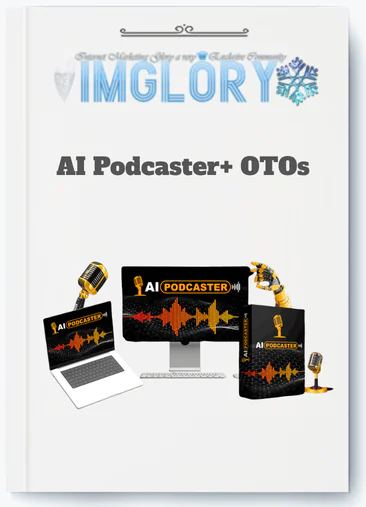
[Group buy] AI Podcaster+ OTOs
$17.00
AI Podcaster is a cloud-based platform that transforms text into complete audio and video podcast episodes using AI hosts, voice synthesis, avatars, and multilingual production tools.
The barrier to starting a podcast has always been the production layer, not the ideas. Most people who have considered launching a show have plenty of topics they could speak to authoritatively. What stops them is everything that comes after the idea: the recording setup, the editing software, the time investment per episode, and the technical learning curve that professional audio production has historically demanded. The result is a vast population of aspiring podcasters who understand their audience, have something genuinely worth saying, and never publish a single episode because the production side feels insurmountable.
AI Podcaster was built to remove that production barrier entirely. It is a cloud-based platform that takes your written content, notes, articles, or ideas and converts them into complete podcast episodes with scripted audio, digital avatar hosts, multi-speaker conversations, and professional audio and video output, all without a microphone, recording booth, or editing software. For bloggers, creators, educators, and solo entrepreneurs who want a podcast presence without the traditional production investment, it offers a genuinely accessible path to consistent audio content in 2026.
What Is AI Podcaster?
AI Podcaster is a cloud-based AI platform that generates complete podcast episodes in both audio and video formats from text inputs, using automated scriptwriting, AI voice synthesis, digital avatar hosts, and multi-speaker conversation engines. It supports over one hundred twenty languages, includes more than fifty digital avatar presenters, and produces faceless podcast content alongside avatar-hosted video episodes, all from a single dashboard without requiring any recording equipment or audio editing expertise.
Before going further, one naming clarification that prevents significant confusion: the term AI podcaster is used in three distinct contexts in 2026. It can refer to a software tool like this product, a human host whose show covers artificial intelligence topics, or a fully synthetic AI-generated show persona. This review covers the specific software product. Understanding that distinction prevents the research confusion that sends people down the wrong path when evaluating what they actually need.
What makes AI Podcaster distinct from basic text-to-speech tools is the complete production workflow it handles within one platform. A text-to-speech converter produces a voice reading your content. AI Podcaster produces a structured episode with a scripted narrative, a presented host or multi-speaker conversation, intro and outro elements, visual avatar presentation for video formats, short-form clip generation, and multi-language publishing capability from one source. For creators whose primary obstacle to podcasting has been the production complexity rather than the content ideas, that distinction is the difference between a partial solution and a complete one.
The platform includes a commercial license, making it relevant not only for personal publishing but for creators, agencies, and freelancers building podcast production services for clients. The cloud-based architecture means there is no software to install, no hardware to maintain, and no rendering workload on the user's own computer.
How AI Podcaster Works: A Step-by-Step Walkthrough
Step 1: Provide Your Source Content
Every AI Podcaster project begins with your source material. You can paste a blog post, upload a document, provide a URL, or enter a topic brief. The platform accepts a range of input formats, which means existing written content can be converted without reformatting. The quality of what you provide at this stage shapes everything that follows: a well-organized, accurate source document produces a more useful script than a rough collection of disconnected notes.
Step 2: AI Script Generation and Review
The platform processes your source and generates a structured script formatted for audio delivery rather than reading. This is the most important human intervention point in the entire workflow. Before any audio is produced, reviewing the generated script for factual accuracy, awkward phrasing, and any content that does not represent your position correctly is essential. AI-generated scripts are starting points requiring editorial judgment, not finished products ready for publication without review.
Step 3: Choose Your Hosts and Presentation Format
You select the avatar host or hosts who will present the episode, choosing from over fifty digital presenters with options for gender, age, and personality profile. You also decide whether the episode is a single-host monologue or a multi-speaker conversation format, which changes the scripting approach and the final presentation dynamic significantly.
Step 4: Voice, Language, and Style Configuration
Voice selection, language setting from over one hundred twenty supported options, pacing, and emotional tone are configured before audio generation. For creators serving multilingual audiences, this is where the same episode can be set up for simultaneous production across multiple language versions.
Step 5: Audio and Video Generation
The platform generates the complete episode with synchronized avatar lip movement for video formats, AI voice narration, and any audio production elements. The output includes both full-length episode formats and short-form clips and reels for social distribution.
Step 6: Review, Export, and Publish
The finished episode is reviewed before export. AI Podcaster supports export in audio and video formats with full resolution options. Before publishing anything, listening through the complete audio or watching the video at full length to catch any synthesis errors, mispronunciations, or pacing problems is the quality step that separates publishable professional output from raw AI generation.
Key Features of AI Podcaster

Automated AI Scriptwriter
The scriptwriting engine is the production foundation that most directly determines episode quality for creators who are converting existing content rather than writing original podcast scripts. The engine processes source material and restructures it for audio delivery, which requires different organization than written content. An article that works well on a page often has a structure that does not translate naturally to listening: dense opening paragraphs, references to visual elements, and complex sentences that read clearly but are confusing when heard at normal speaking pace.
The scriptwriter addresses these audio-specific requirements by restructuring content with conversational opening hooks, simplified sentence structures, and section transitions that work aurally rather than visually. The practical result for a blogger converting their articles to audio is a first draft that is already closer to a listenable episode than the raw article text would be, requiring editing and enrichment rather than complete reconstruction.
The critical editorial principle that applies universally to AI-generated scripts is treating every output as a working draft requiring human review before audio generation begins. Factual claims require verification. Tone requires alignment with your actual brand voice. Any content touching health, finance, legal guidance, or similar high-stakes topics requires expert review before publication. These are not optional quality enhancements; they are the minimum responsible publishing standards that apply regardless of how impressively efficient the generation process is.
50+ Digital Avatars and Podcast Presenters
The digital avatar system provides visual hosts for video podcast formats, with over fifty presenter options covering diverse age, gender, and personality profiles. Avatar-hosted podcast videos represent a growing format in 2026 because they provide the visual engagement that audiences increasingly expect from video platforms without requiring the creator to appear on camera or invest in video production infrastructure.
For creators who want a podcast presence across YouTube, social media video platforms, and audio distribution simultaneously, the avatar system provides the visual layer that makes video-format episodes viable without personal camera presence. The lip synchronization technology aligns avatar mouth movements with AI-generated speech, producing a visual presentation that is noticeably more polished than early AI avatar tools while falling short of human-quality video presentation in ways that audiences familiar with AI content will recognize.
The avatar selection decision has brand implications that extend beyond individual episodes. The presenter you choose becomes part of your show's visual identity across all episodes, and visual consistency across a catalog of episodes creates the recognition signals that audience retention depends on. Choosing an avatar whose visual personality aligns with the content tone and intended audience, rather than defaulting to the first option, is a setup investment that pays dividends across the entire show's run.
Multi-Speaker Conversation Engine
The multi-speaker engine generates scripted dialogue between two or more AI-voiced participants, creating a conversational episode format rather than a single-narrator monologue. This format is significant because dialogue is one of the primary ways podcasts create engagement beyond what a single-voice presentation provides. Two voices exploring a topic from different angles, asking and answering questions, or debating positions creates audio dynamics that monologue formats cannot replicate.
For creators who have wanted to produce a conversation-format show but lacked a co-host or the ability to arrange guest interviews consistently, the multi-speaker engine provides a structural alternative. The realistic assessment of this feature is that AI-generated dialogue lacks the spontaneity, genuine reaction, and conversational chemistry of real human conversation. Two AI voices following a scripted exchange sound different to experienced podcast listeners than an authentic recorded conversation. For informational content where the conversational format serves primarily as a structural device rather than as genuine dialogue chemistry, the format works effectively. For shows where authentic human interaction is the primary value, no AI conversation engine substitutes for real people talking.
120+ Language Translation and Republishing
The multilingual support covering over one hundred twenty languages enables creators and businesses to produce the same episode across multiple language versions from one source document. This capability addresses one of the most significant reach limitations that individual creators and small teams face when publishing in a single language: the entire audience that exists for their content in other language markets remains unreachable without translation and localization investment that traditional production methods make prohibitively expensive at scale.
The operational workflow for multilingual publishing involves producing the master episode in the primary language, verifying the script for accuracy, and then generating translated versions for target languages. The quality consideration that experienced multilingual publishers understand is that translation quality for complex or nuanced content requires native speaker review before publication. Machine translation handles straightforward informational content effectively and handles culturally specific references, idiomatic language, and specialized terminology with significantly less reliability. For content in high-stakes categories where translation errors create real problems for listeners acting on the information, native speaker review is not optional regardless of how capable the translation engine is.
Podcast Clips, Reels, and Short-Form Content
The short-form content generation capability produces clips and social media reels from full episode content, addressing the distribution reality that podcast discovery increasingly happens through short-form platforms before audiences commit to full episode listening. A well-produced sixty-second clip from a compelling section of a longer episode, formatted for Instagram, TikTok, or YouTube Shorts, can reach audiences who would never encounter the full episode through traditional podcast distribution.
The platform's ability to generate these clips within the same workflow that produced the full episode removes the separate editing session that traditional clip creation requires. For creators publishing consistently across multiple platforms simultaneously, this integration reduces the per-episode production overhead that distributing across many formats would otherwise create.
AI Voice Generation with Lip-Sync Technology
The voice synthesis and lip-sync system produces audio narration synchronized with avatar visual presentation, which is the technical combination that enables video podcast formats without human recording. The voice quality available in AI Podcaster reflects the significant improvements that have occurred in voice synthesis technology since the early synthetic voices that were clearly distinguishable from human speech.
The honest quality assessment for AI voice generation in 2026 is that it is genuinely usable for most informational and educational content, and that experienced listeners can still identify the characteristic patterns of AI narration in ways that affect authenticity perception differently from human-recorded audio. For shows where the host's authentic human personality and distinctive vocal presence are central to the audience relationship, AI voice synthesis is a compromise. For shows where the information content is the primary value and the voice is the delivery mechanism, AI voice quality is sufficient for the informational purpose.
Faceless Podcast Creation
The faceless podcast workflow enables complete podcast production without any human on-camera presence, using avatar hosts for video formats and AI voices for audio formats. For creators whose reluctance to start a podcast is specifically about personal exposure, the faceless production approach removes that barrier entirely while still enabling both audio and video podcast formats across distribution platforms.
The faceless approach has genuine commercial viability in 2026 across categories including educational explainers, news summary shows, tool and product review podcasts, and niche topic shows where the information content rather than the presenter's personality is the primary audience draw. Shows where audience connection to a specific human personality drives subscription and retention are not well-served by faceless production regardless of how polished the avatar presentation is.
Pricing Plans and OTOs detailed
Front-End – AI Podcaster ($14.95 one-time)
- One-time payment with lifetime access
- AI-powered podcast creation platform for audio and video episodes
- Automated AI scriptwriter included
- 50+ digital avatars and AI podcast presenters
- Multi-speaker conversation engine included
- Supports 120+ language translations and republishing
- Commercial license included
- Cloud-based dashboard with no monthly fees
- Supports faceless podcast creation workflows
- Create podcast clips, reels, and short-form content
- AI voice generation with lip-sync technology
- Beginner-friendly setup and workflow
- 30-day money-back guarantee included
OTO 1 – AI Podcaster Unlimited ($65 – $67 one-time)
- Removes all usage restrictions from the platform
- Unlimited audio and video podcast creation
- Unlimited AI podcast hosts and talking avatars
- Unlimited script, hook, and episode generation
- Unlimited AI voice cloning and emotional voices
- Unlimited multi-speaker podcast creation
- Unlimited podcast clips, reels, and shorts
- Unlimited translations in 120+ languages
- Unlimited HD and 4K exports without watermarks
- Unlimited downloads and commercial projects
- Unlimited faceless podcast automation
- VIP rendering priority and faster performance
- Priority server access included
- Future updates included automatically
- Commercial rights included
OTO 2 – AI Podcaster PRO ($65 – $67 one-time)
- Advanced AI podcast automation and cinematic tools
- Human-level AI debate and conversation engine
- Netflix-style podcast visuals and multi-camera scenes
- Viral hook generator included
- One-prompt full podcast automation
- Celebrity personality simulation for AI hosts
- AI viral topic finder for trending content ideas
- Automatic b-roll and subtitle generation
- Emotion-control voice engine included
- HyperFast rendering engine for faster exports
- 24/7 faceless channel automation system
- Built-in monetization tools for sponsor ads and CTAs
- Unlimited 4K exports with no watermarks
- Multiple device support included
- Reseller license included in Pro Regular
- Whitelabel license included in Pro Full Access
OTO 3 – AI Workers ($97 one-time)
- Access to 20 AI workers for marketing and content tasks
- AI website and sales funnel creation tools
- Unlimited email and SMS campaign creation
- AI image, logo, and artwork generation
- 4K AI video creation included
- Copywriting and blog content generation
- AI voiceover and music generation tools
- AI course creation and SEO support
- Social media management and chatbot creation
- AI eBook and flipbook generation
- AI stock media and avatar video creation
- Affiliate marketing support tools included
- Mobile edition included
- Commercial license included
- Step-by-step training and support included
- Lifetime updates included
- 30-day money-back guarantee included
OTO 4 – AI Podcaster 1st Page Ranker ($47 one-time)
- Cloud-based SEO and ranking platform
- Unlimited HQ backlink generation
- Supports Google, Bing, Yahoo, and YouTube rankings
- Faster indexing for podcast pages and websites
- Autopilot SEO workflow included
- Traffic-focused ranking tools included
- Supports blogs, podcast pages, stores, and websites
- Unlimited commercial license included
- Sell SEO and ranking services to clients
- Beginner-friendly dashboard and training included
- 30-day money-back guarantee included
OTO 5 – 10X Traffic ($37 one-time)
- Targeted buyer traffic generation system
- Claimed 1,000–3,000 clicks daily
- Works with affiliate links, funnels, and sales pages
- Supports WarriorPlus, JVZoo, ClickBank, and LaunchPad
- Helps promote podcast content and online offers
- Traffic solution for marketers and agencies
- Useful for list building and lead generation
- Access to vendor traffic network included
- Limited-access traffic offer
- Money-back guarantee included
OTO 6 – AI Podcaster Agency ($97 one-time)
- Agency license included
- Sell unlimited AI Podcaster accounts to clients
- Admin dashboard for customer management
- Unlimited customer account creation
- Ready-made sales pages and funnels included
- Marketing videos and promotional assets included
- Charge monthly, yearly, or one-time fees
- Accept payments via PayPal, Stripe, and bank accounts
- Vendor handles client support
- No developers or technical setup needed
- Built for podcast agency businesses
- Includes fast-action bonuses
- One-time payment with no recurring fees
OTO 7 – AI Podcaster Whitelabel ($197 one-time)
- Full white-label license included
- Launch your own rebranded AI podcast software
- Custom software name, logo, branding, and domain
- Vendor setup and hosting support included
- Updates and support handled for your customers
- Sell unlimited user accounts
- Built-in PayPal payment support
- Launch on WarriorPlus, JVZoo, and similar platforms
- Training for software launches and traffic generation
- Affiliate recruitment training included
- Unlimited bandwidth and traffic included
- No monthly fees mentioned
- 30-day money-back guarantee included
Advantages of AI Podcaster
- Complete podcast production without recording equipment eliminates the hardware barrier that stops most aspiring creators from launching. No microphone, recording interface, acoustic treatment, or editing software is required for a fully produced episode, which removes the capital and skill investment that traditional podcast production demands before a single episode can be published.
- Multi-format output from one production session covers audio, video, and short-form distribution simultaneously. Producing audio, video, and social clips within one workflow rather than through separate production sessions for each format reduces the per-episode time investment for multi-platform distribution significantly.
- 120+ language support enables global audience reach from a single source document. The ability to publish the same episode across multiple language versions expands potential audience reach in ways that single-language publishing cannot approach, particularly for educational and informational content categories where the audience exists across many language markets.
- The commercial license makes podcast production a viable service offering for agencies and freelancers. Explicit commercial rights to produced content removes licensing ambiguity for creators building podcast production services for clients rather than only for personal publishing.
- The cloud-based architecture removes hardware and software maintenance requirements. No local software installation, no rendering workload on personal hardware, and no compatibility management across operating systems simplifies the technical environment for creators who want to focus on content rather than infrastructure.
Disadvantages of AI Podcaster
- AI-generated scripts require mandatory human editorial review before audio production. Every script produced by the platform contains the characteristic limitations of AI generation: potential factual errors, generic phrasing, and tone misalignment with the creator's actual voice. Publishing without review is the single most common and most consequential mistake new AI podcast tool users make.
- Avatar-hosted video lacks the authentic human connection that personality-driven podcast formats require. For shows where audience loyalty is built on connection with a specific human presenter, AI avatar presentation is a functional limitation rather than an aesthetic preference.
- AI conversation dialogue does not replicate the spontaneity and chemistry of genuine recorded conversation. Multi-speaker formats produced through scripted AI dialogue sound structurally different from authentic human conversation to experienced listeners, which affects perceived authenticity in formats where genuine conversation is the primary appeal.
- Platform dependency introduces business continuity risk for creators building show catalogs on cloud infrastructure. Service availability, pricing changes, and feature modifications affect publishing workflows in ways that self-managed tools do not.
- Marketing, distribution, and audience building remain entirely outside the platform's scope. AI Podcaster produces episodes. Getting those episodes discovered, building a subscriber base, and generating the listener loyalty that sustains a show over time are publishing activities the platform does not address.
Who Is AI Podcaster For?
- Bloggers and content creators who want to add audio and video podcast formats to their existing content without creating new material from scratch or investing in recording infrastructure benefit most directly from AI Podcaster's content conversion workflow. Existing articles, guides, and written resources become podcast episodes with editorial investment rather than complete reproduction from scratch.
- Solo entrepreneurs and small business owners who need consistent podcast presence for audience building and authority development but lack the time, equipment, and production skills for traditional podcast production get a production-accessible path to regular episode publishing that manual methods would make impractical without dedicated resources.
- Educators and course creators who want to extend their written or slide-based lesson content into audio formats for students who learn better through listening, commuting students, or accessibility needs find AI Podcaster's document-to-audio workflow well-matched to their content conversion requirements.
- Agencies and freelancers building podcast production services for clients gain a production infrastructure that enables them to offer podcast creation without the recording and editing bottleneck that traditional production would impose on service delivery at scale.
Who Is AI Podcaster Not For?
- Creators building shows where the host's authentic human personality is the primary audience draw will find that AI avatar presentation and synthesized voice cannot replicate the authentic connection that audience loyalty to a specific human personality depends on.
- Publishers in YMYL content categories including health, medical, financial, and legal topics where AI-generated content carries factual accuracy risks that qualified expert review cannot be substituted for, regardless of production efficiency considerations.
- Users expecting audience growth without promotional and distribution effort. The platform produces episodes. Discovery, listener acquisition, and retention require marketing strategy, platform optimization, and audience engagement that no production tool provides.
AI Podcaster vs. The Alternatives
| Criteria | AI Podcaster | Traditional Recording | Descript | ElevenLabs + Canva | Simple Text-to-Speech |
| Setup Requirement | None | Studio/mic/software | Software install | Multiple accounts | Minimal |
| Script Generation | Yes | Manual | Limited | No | No |
| Avatar Video Hosts | Yes | No | No | No | No |
| Multi-Speaker Format | Yes | Requires guests | No | No | No |
| Language Support | 120+ | Requires multilingual hosts | Limited | Limited | Varies |
| Short-Form Clips | Yes | Manual editing | Yes | Manual | No |
| Commercial License | Yes | N/A | Yes | Varies | Varies |
| Audio Quality | Good | Highest | High | High | Basic |
| Human Authenticity | Limited | Highest | Highest | Limited | None |
| Best For | Faceless, multi-format, scale | Personality-driven shows | Human editing | Audio quality focus | Simple read-aloud |
AI Podcaster wins most clearly for creators who need complete podcast production without recording infrastructure, multi-format output from one workflow, and multilingual publishing capability. Traditional recording retains the decisive advantage for personality-driven shows where human authenticity is the product. Descript serves creators who record human audio and need powerful editing tools rather than AI content generation. ElevenLabs provides higher-quality individual voice synthesis without the complete production workflow that AI Podcaster integrates. Simple text-to-speech tools serve read-aloud needs without the scripting, avatar, multi-speaker, and clip generation capabilities that complete podcast production requires.
Frequently Asked Questions About AI Podcaster
- What exactly is AI Podcaster and how is it different from a text-to-speech tool?
AI Podcaster is a complete podcast production platform that generates scripted episodes, avatar-hosted video content, multi-speaker conversations, short-form clips, and multilingual versions from text inputs. A text-to-speech tool converts text to voice without the scriptwriting, avatar presentation, multi-speaker format, video production, or social clip generation that AI Podcaster integrates into one workflow. The distinction is between a single-function voice reader and a complete podcast production environment.
- Do I need a microphone or any recording equipment to use AI Podcaster?
No. The platform handles all audio and video production through AI generation without requiring any microphone, recording interface, acoustic space, or editing software. A browser-connected computer with internet access is the only hardware requirement. This is the core accessibility advantage the platform provides for creators whose primary barrier to podcasting has been the traditional production infrastructure.
- How much human editing do AI-generated scripts require before recording?
Every AI-generated script requires meaningful human editorial review before audio generation. The specific editing required includes factual verification of all specific claims, tone alignment with the creator's actual brand voice, removal of generic phrasing that does not reflect the creator's perspective, and structural improvements that make the content more compelling to listen to. For content touching health, finance, legal, or other high-stakes topics, expert review is a non-negotiable quality requirement regardless of how capable the generation engine is.
- Can AI Podcaster produce video podcast episodes as well as audio?
Yes. The platform produces both audio podcast episodes and video episodes featuring digital avatar hosts with synchronized lip movement. The multi-format output covers full-length episodes for both audio and video distribution platforms, plus short-form clips and reels formatted for social media platforms. This multi-format coverage from one production session is one of the platform's primary operational advantages over single-format production tools.
- How good is the multilingual support and can I trust AI translations for international audiences?
AI Podcaster supports over one hundred twenty languages for episode translation and republishing. The translation quality for straightforward informational content is generally functional. For content with cultural nuance, idiomatic language, specialized terminology, or any high-stakes topic where translation errors create real problems for international listeners, native speaker review before publication is strongly recommended. Machine translation is a productivity tool for international reach, not a substitute for professional localization on content where accuracy genuinely matters.
- Is AI Podcaster suitable for producing a show about artificial intelligence specifically?
Yes, though the naming overlap creates some confusion worth acknowledging. AI Podcaster the software product can be used to produce podcasts on any topic including artificial intelligence. A show about AI produced using AI Podcaster would be both an AI podcast in the topic sense and an AI-produced podcast in the production sense. The platform's content generation is topic-agnostic; what matters for quality is the accuracy of the source material provided and the editorial investment applied to the generated scripts.
- What happens to the audio quality if I choose a less popular language option?
Voice synthesis quality varies across languages, with generally stronger performance in widely spoken languages and more variable quality in less commonly supported ones. Before committing to multilingual production for a specific non-English market, generating sample audio in that language and evaluating it against your quality standards for that audience is the appropriate verification step rather than assuming consistent quality across all supported languages.
- Can I use AI Podcaster to produce podcast content for clients commercially?
Yes. A commercial license is included with the platform, explicitly covering client work and professional service delivery. Creators, agencies, and freelancers building podcast production services for clients can use AI Podcaster's output in those commercial contexts without separate licensing concerns. Reviewing the current Terms of Service for any restrictions on specific commercial applications before building a client service model on those terms is appropriate due diligence.
- How does the multi-speaker conversation format work and how realistic does it sound?
The multi-speaker engine generates scripted dialogue between two or more AI-voiced participants based on your source content and format instructions. The resulting dialogue follows the scripted exchange with different AI voices representing each speaker. Experienced podcast listeners will notice that the dialogue lacks the spontaneous reactions, natural interruptions, and conversational rhythm of authentic recorded human conversation. For informational content where the dialogue format serves as a structural device rather than as genuine conversation chemistry, the format is effective. For shows where authentic human interaction is the primary draw, it is not a substitute for recording real people talking.
- What disclosure obligations apply when publishing AI-generated podcast content?
Disclosure best practice for AI-generated podcast content involves a brief mention in the episode itself and a note in the episode description or show notes indicating that the content was substantially produced with AI assistance. This is both an ethical publishing standard and a practical trust-building measure with audiences who increasingly have expectations about content authenticity. For specific platform or regulatory disclosure requirements in your jurisdiction or publishing context, reviewing current platform terms and applicable content disclosure regulations is appropriate rather than relying on general best practice alone.
- How does AI Podcaster handle show notes, transcripts, and supporting content?
Show notes and transcripts that accompany published episodes provide text content that supports both listener accessibility and search engine indexing of episode topics. AI Podcaster's generation capabilities can support show note drafting alongside episode scripts, though these supporting content elements require the same editorial review standard as the episode scripts themselves. Accurate, detailed show notes that reflect the episode's actual content add genuine value for both listeners and search performance. Thin or inaccurate show notes that do not represent the episode faithfully reduce both listener trust and the indexing benefit that accurate show notes provide.
- What is the realistic publishing cadence a solo creator can maintain using AI Podcaster?
A solo creator applying appropriate editorial review to each episode can realistically produce two to four episodes per week using AI Podcaster compared to one or two per month through traditional recording and editing. The cadence depends primarily on how much source content is available for conversion, how much editorial investment each episode requires, and how many formats are being produced per episode. Creators who build systematic editorial review workflows rather than approaching each episode as an isolated production task develop the consistent cadence that audience growth depends on.
Be the first to review “AI Podcaster+ OTOs”
You must be logged in to post a review.
Related products

GB SAAS Tools
GB SAAS Tools
GB SAAS Tools
GB SAAS Tools
GB SAAS Tools
Reviews
There are no reviews yet.