


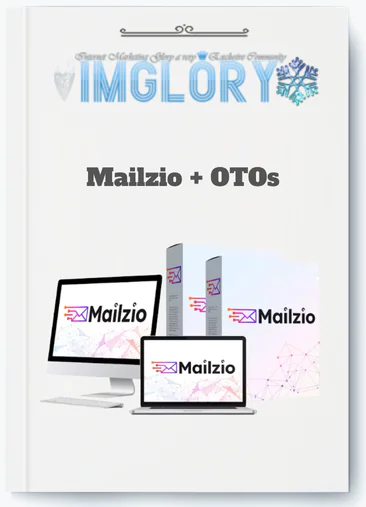
[Group buy] Mailzio + OTOs
$17.00
Mailzio is a cloud-based AI-assisted marketing platform that combines email marketing, CRM, automation workflows, and multichannel messaging into a single dashboard.
If you have been researching email marketing platforms recently, you have likely encountered Mailzio positioned as an affordable, AI-powered alternative to established tools like Mailchimp, ActiveCampaign, and ConvertKit. The claims are familiar: unlimited sending, multichannel capability, built-in AI writing tools, and a one-time pricing option that promises to eliminate recurring ESP subscription costs permanently. Those claims deserve careful examination before any platform migration decision, particularly when your subscriber list, your automation sequences, and your revenue-generating campaigns are involved.
This review takes the approach that careful buyers deserve: an honest, evidence-based examination of what Mailzio actually delivers, where its capabilities genuinely stand up to scrutiny, where its limitations become operationally relevant, and how it compares directly to the alternatives most people are already evaluating. The goal is not to sell you on Mailzio or away from it. It is to give you the specific information needed to make a confident decision about whether it fits your specific situation, your list size, and your technical requirements in 2026.
What Is Mailzio?
Mailzio is a cloud-based, AI-assisted email and multichannel marketing platform that combines autoresponder functionality, visual automation workflow building, CRM-style contact management, and multichannel messaging across email, WhatsApp, SMS, and Telegram into one dashboard. AI tools covering email copy generation, subject line creation, URL content cloning, and reply assistance are built into the campaign workflow rather than available as separate modules.
The platform is positioned as a more affordable, AI-enhanced alternative to traditional email service providers, with particular appeal for users whose lists are growing and who are feeling the cost escalation that per-subscriber pricing models create as audience size increases. Before evaluating any individual feature, the honest framing that matters most for prospective buyers is understanding what Mailzio actually is versus what its marketing sometimes implies.
Mailzio is a functional email and multichannel marketing platform with genuine AI capabilities and a cost model that genuinely differs from traditional ESPs. It is not a passive income system, not a guaranteed deliverability solution regardless of sender behavior, and not a complete replacement for every tool in a complex marketing technology stack. The users who get the most value from it are those who evaluate it against their actual operational requirements rather than against the most ambitious claims in its promotional materials.
How Mailzio Works: A Step-by-Step Walkthrough
Step 1: Account Setup and Authentication
Account creation is followed by sender domain configuration, SMTP connection, and SPF and DKIM authentication setup. Domain authentication is the technical foundation that inbox placement depends on, and completing it correctly before any campaign sending begins is the single most important setup step for new Mailzio users.
Step 2: Contact Management and List Setup
Contacts are imported via CSV or direct integration, organized into lists for audience grouping, and tagged for behavioral and interest-based segmentation. Clean import practices protecting deliverability and platform compliance are required before any existing list migration begins.
Step 3: Campaign Creation with AI Tools
The drag-and-drop email builder or HTML editor creates campaigns with AI writing assistance generating drafts and subject line variations from campaign brief inputs. Human editorial review of all AI-generated content for brand voice, accuracy, and spam-trigger phrases is required before scheduling.
Step 4: Automation and Multichannel Workflow Configuration
The visual automation builder configures multi-step subscriber journeys combining email, SMS, and WhatsApp steps with conditional branching, time delays, and tag-based actions. Pre-built templates provide starting structures for standard automation programs.
Step 5: Deployment and Performance Monitoring
Campaigns are deployed and monitored through the analytics dashboard covering standard email performance metrics, automation workflow analytics, and revenue attribution where tracking integration is enabled.
Key Features of Mailzio

Email Marketing and Autoresponder Core
The email marketing foundation covers broadcast campaigns for newsletters and promotions, drip sequences for timed nurture series, evergreen campaigns running continuously for new subscribers, and event-based trigger campaigns firing on behavioral actions. The sending limit model that most distinguishes Mailzio from traditional ESPs is the absence of per-subscriber cost escalation. Where Mailchimp, ActiveCampaign, and ConvertKit charge incrementally as lists grow, Mailzio's flat-rate pricing removes that ceiling, which represents a meaningful cost difference for marketers managing lists above ten thousand contacts sending regular campaigns.
The honest assessment of what “unlimited” sending means in practice is worth stating precisely. The absence of hard per-subscriber pricing caps does not mean zero infrastructure constraints at any sending volume. Fair usage policies apply, very high-volume senders may encounter per-hour rate limits, and senders with specific deliverability requirements may need to connect an external SMTP provider for maximum inbox placement control. Verifying the specific limits that apply at your sending volume before assuming fully unlimited capacity is the due diligence that prevents discovering constraints after migration.
List organization through lists, tags, and custom fields creates segmentation capability that targeted campaign delivery requires. The combination of behavioral tags for interest-based segmentation and custom fields for business-specific data storage enables the precise audience filtering that separates relevant, well-targeted campaigns from broad list-level blasts that treat all subscribers identically regardless of their demonstrated engagement and intent signals.
Visual Automation Workflow Builder
The automation builder covers the trigger-action-delay architecture that most small business and creator marketing programs require without needing technical development skills to build or maintain. Trigger types include new subscription, link click, tag addition or removal, purchase events, inactivity periods, and custom API events. Action types include email sending, SMS, WhatsApp messaging, tag management, list movement, CRM pipeline stage advancement, and team notifications.
The honest assessment of the automation builder's capability range matters for prospective buyers evaluating whether it covers their specific requirements. Standard automation programs including welcome series, drip nurture sequences, cart abandonment recovery, re-engagement campaigns, and event reminder flows are well within the builder's practical capability. Very complex multi-branch behavioral programs with extensive conditional logic trees, large-scale event-driven workflows from multiple simultaneous data sources, or long-horizon autonomous operation sequences may encounter the no-code ceiling before exhausting what the marketing program requires. Evaluating the builder's capability against your specific automation requirements during any trial period is more reliable than assessing it from feature descriptions alone.
AI Writing and Content Tools
The AI writing tools are the feature category where honest evaluation requires distinguishing between what the AI genuinely accelerates and what it cannot replace. The email writer generates structured drafts from campaign goal, audience, offer, and tone inputs, producing a starting point for human refinement rather than a finished publication. Subject line generation produces multiple emotional angle variations simultaneously, directly supporting systematic A/B testing without the manual writing time of each alternative. URL content cloning generates structurally inspired emails from web page analysis, useful for developing follow-up sequences around existing high-converting landing page frameworks.
What the AI tools genuinely deliver is first-draft acceleration that reduces campaign content production time meaningfully for marketers who currently write all campaign copy from scratch. What they do not deliver is finished, publication-ready content that bypasses the need for human editorial judgment. Brand voice consistency, factual accuracy verification, spam-trigger phrase identification, and the specific offer details that make campaign content genuinely relevant to a specific audience are human responsibilities that AI generation supports rather than replaces. Evaluating the AI tools as production accelerators rather than autonomous content generators produces accurate expectations and better outcomes than treating AI-generated drafts as ready-to-send campaigns.
CRM and Contact Management
The CRM layer extends Mailzio beyond a standard email sender into lightweight contact relationship management. Contact profiles store identity information, behavioral data, team notes, custom fields, and activity timelines across all channel interactions. Pipeline management tracks contacts through defined sales stages either manually or through workflow automation rules. The honest scope definition for this feature is important for prospective buyers evaluating whether it covers their CRM requirements. Mailzio's CRM is appropriate for small team sales processes and basic contact relationship tracking. It is not a replacement for dedicated enterprise CRM platforms with complex deal management, multi-team coordination, and advanced forecasting capabilities that sales-intensive organizations require.
Multichannel Messaging
The multichannel capability is the feature that most directly distinguishes Mailzio from email-only platforms and most directly enables it to replace multiple separate tool subscriptions for businesses currently managing email, SMS, and WhatsApp through different platforms. WhatsApp Business integration, SMS direct messaging, Telegram broadcast support, Slack internal notifications, and live chat consolidation into a unified inbox create a genuine single-platform communication management capability rather than a collection of loosely connected separate tools.
The compliance requirement that WhatsApp Business integration carries deserves explicit emphasis for any prospective buyer planning to use this feature. Sending WhatsApp messages through Mailzio requires explicit subscriber consent for WhatsApp communication collected separately from email consent, use of WhatsApp-approved message templates for outbound notifications, and full compliance with WhatsApp Business policies. These are not optional best practices. Non-compliance risks account suspension regardless of which platform is used to send the messages, which makes understanding and implementing WhatsApp compliance requirements a prerequisite for using this feature rather than something to figure out after deployment.
Analytics and Performance Tracking
The analytics dashboard covers standard campaign performance metrics, automation workflow step analytics, and revenue attribution where tracking integration is enabled. The diagnostic value of workflow step analytics, specifically showing where contacts drop off within automation sequences and which steps generate the most downstream engagement, is where the analytics layer provides its most actionable insight for optimization decisions beyond basic campaign performance monitoring.
Revenue attribution connecting campaign sends to recorded purchases is the reporting dimension that most directly demonstrates marketing program business impact. For businesses evaluating whether Mailzio's analytics depth meets their measurement requirements, the honest assessment is that the available metrics cover the optimization and reporting needs of most small business and creator marketing programs and may be less granular than the advanced behavioral event tracking and multi-touch attribution modeling that data-intensive enterprise marketing operations require.
Pricing Plans and OTOs detailed
Front-End – Mailzio ($15.99 one-time)
- One-time payment with lifetime access
- AI-powered email marketing and automation platform
- Unlimited email sending included
- CRM, workflow automation, and multi-channel communication tools
- Supports Email, WhatsApp, SMS, Telegram, Slack, and more
- Commercial license included
- No expensive monthly autoresponder fees
- Built for marketers, freelancers, agencies, ecommerce sellers, and businesses
- Includes 30-day money-back guarantee
- Coupon code “MAILZ30” gives 30% off the entire funnel
OTO 1 – Mailzio Unlimited Edition ($47 – $97/$37 one-time)
- Removes all platform restrictions
- Unlimited AI email replies and campaigns
- Unlimited automations, contacts, and CRM pipelines
- Unlimited workflow executions and multi-channel messaging
- Faster AI processing and premium templates
- Advanced analytics and priority performance
- Commercial license included
- Future updates included
- Designed for agencies, marketers, freelancers, and growing businesses
OTO 2 – DFY Emails Pack ($27/$17 one-time)
- 10,000+ done-for-you email templates and campaigns
- Ready-made promotional, follow-up, and nurturing emails
- Built around proven sales copywriting frameworks
- Saves time on campaign creation
- Easy customization and fast deployment
- Great for beginners, agencies, and email marketers
- Works with Mailzio automation workflows
OTO 3 – PageMate ($27/$17 one-time)
- AI-powered website and funnel builder
- Create landing pages and sales funnels without coding
- 1000+ ready-made templates included
- Drag-and-drop page customization
- AI-powered optimization tools
- Mobile-responsive designs
- Fast-loading websites and funnels
- Commercial license included
- Built for affiliates, agencies, coaches, ecommerce, and local businesses
OTO 4 – TrafficPilot ($37/$27 one-time)
- AI-powered traffic generation system
- Automates organic social media traffic campaigns
- Drive visitors to websites, funnels, blogs, and affiliate offers
- Traffic automation and lead generation tools
- Helps reduce reliance on paid ads
- Supports affiliate marketing and lead building
- Designed for bloggers, affiliates, marketers, and business owners
OTO 5 – Profit Niche Sites ($27/$17 one-time)
- 50 done-for-you niche websites included
- Built for passive affiliate income generation
- Clone and deploy sites in a few clicks
- Automated traffic and monetization tools
- Multiple niche opportunities included
- Commercial license included
- Beginner-friendly passive income system
OTO 6 – Affiliate Empire ($16.98 one-time)
- 100+ done-for-you affiliate campaigns
- Prebuilt income streams and monetization systems
- Set-and-forget affiliate automation
- Traffic, leads, and commission-focused campaigns
- Beginner-friendly affiliate setup
- Includes training and monetization guidance
- Integrates with Mailzio automation tools
OTO 7 – Reseller License ($67 – $147/$97 one-time)
- Resell Mailzio and keep 100% commissions
- Done-for-you sales pages and marketing materials
- Hosting, payment processing, and support handled for you
- Sell front-end and upgrade offers
- Great for affiliates, agencies, freelancers, and beginners
- Launch a software business without creating a product
OTO 8 – White Label License ($247 – $497/$447 one-time)
- Fully rebrand Mailzio as your own software platform
- Use your own logo, branding, domain, and business identity
- Keep 100% of profits
- Hosting, setup, and technical configuration handled for you
- Includes payment integrations and sales materials
- Built for agencies, entrepreneurs, and SaaS business owners
- Includes launch guidance and scaling support
Advantages of Mailzio
- Flat-rate pricing removes per-subscriber cost escalation for growing lists. The cost difference relative to traditional ESP pricing at list sizes above ten thousand contacts is real and meaningful, representing a genuine economic argument for users whose current platform costs are scaling uncomfortably with list growth.
- Multichannel capability in one platform replaces multiple separate tool subscriptions. Email, SMS, WhatsApp, and Telegram management from one workflow rather than coordinating across separate platforms reduces both subscription costs and operational complexity for businesses currently using distinct tools for each channel.
- Built-in AI writing tools genuinely reduce campaign production time. Subject line generation, email body drafting, and URL content cloning collectively provide real production acceleration for marketers who write their own campaign content, producing starting drafts in seconds rather than requiring original composition for every campaign.
- Visual automation builder with pre-built templates lowers the barrier for non-technical users. Deploying professional nurture sequences and behavioral trigger workflows without development resources or advanced technical knowledge is a genuine accessibility advantage over platforms that require more technical configuration to achieve equivalent automation capability.
- Unified inbox consolidation reduces context-switching for small teams. Managing email, WhatsApp, SMS, and live chat responses from one view with full contact profile context eliminates the platform-switching overhead that handling multiple communication channels separately creates for lean teams.
Disadvantages of Mailzio
- Shorter track record than established ESPs creates deliverability uncertainty. Mailchimp, ActiveCampaign, and ConvertKit carry decade-plus deliverability histories that provide more predictable inbox placement performance than a newer platform still building its long-term track record. For businesses whose revenue depends on consistent inbox placement across large lists, this track record difference is a real consideration rather than a minor caveat.
- Integration ecosystem is narrower than established platforms. Users whose marketing operations depend on specific niche integrations, proprietary system connections, or extensive third-party app ecosystems should verify current integration availability against their specific requirements before committing to a migration that depends on those connections.
- Learning curve for automation workflows requires investment from new users. Marketers without prior experience with visual workflow builders will need time to become proficient with multi-branch conditional automation configuration, particularly for sequences more complex than basic linear drip structures.
- AI content requires consistent human editorial investment before sending. Every piece of AI-generated campaign content requires brand voice review, factual accuracy verification, and spam-trigger phrase removal before scheduling. This editorial responsibility does not decrease with AI generation volume and must be built into campaign production workflows rather than bypassed in the interest of speed.
- Enterprise compliance limitations restrict suitability for regulated industry users. Organizations requiring SOC 2 certification, HIPAA compliance, or strict regional data residency mandates should evaluate established platforms with verified compliance certifications rather than a newer platform still building its compliance documentation.
Who Is Mailzio For?
- Affiliate marketers with lists above ten thousand contacts who are experiencing the per-subscriber cost escalation that traditional ESPs create at scale, and who want multichannel reach across email and messaging platforms to improve campaign engagement rates, represent one of Mailzio's strongest use case fits.
- Course creators and info-product sellers who run nurture sequences, promotional campaigns around product launches, and post-purchase follow-up automation get a genuinely useful combination of automation building, AI writing assistance, and multichannel reach in one platform without the enterprise complexity or cost of established alternatives at equivalent capability levels.
- Small businesses wanting email plus SMS plus WhatsApp from one platform who are currently managing separate tools for each communication channel and want to consolidate without the enterprise pricing of established multichannel marketing suites get the clearest operational benefit from Mailzio's all-in-one architecture.
- Agencies managing multiple small business and creator clients who want centralized multi-client management, AI-assisted production tools, and multichannel capability across client accounts from one platform rather than separate subscriptions per client benefit from both the operational consolidation and the economic model that flat-rate agency pricing provides.
Who Is Mailzio Not For?
- Enterprise organizations with compliance requirements including SOC 2, HIPAA, or strict data residency mandates need established platforms with verified certifications rather than a newer platform whose compliance documentation is still developing.
- Teams with deeply complex integration requirements whose marketing operations depend on extensive third-party connections or proprietary system integrations not yet covered by Mailzio's current integration ecosystem should verify specific compatibility before committing to a migration that depends on those integrations.
- Users expecting fully automated email marketing without ongoing human involvement will be disappointed regardless of which platform they choose. AI tools accelerate production and automation reduces manual execution, but audience building, content strategy, list hygiene, and performance optimization remain human responsibilities that no platform automates credibly at the quality level that competitive email marketing requires.
Mailzio vs. The Alternatives: A Detailed Comparison
| Criteria | Mailzio | Mailchimp | ActiveCampaign | ConvertKit | GetResponse |
| Pricing Model | Flat rate / lifetime | Per subscriber | Per subscriber | Per subscriber | Per subscriber |
| Multichannel (SMS, WhatsApp) | Yes | Limited | Limited | No | Yes |
| Built-in AI Writing | Yes | Basic | Limited | No | Limited |
| Visual Automation Builder | Yes | Yes | Yes | Yes | Yes |
| Light CRM | Yes | Basic | Yes | Basic | Basic |
| Unified Inbox | Yes | No | No | No | No |
| Platform Maturity | Newer | Established | Established | Established | Established |
| Integration Ecosystem | Growing | Extensive | Extensive | Moderate | Moderate |
| Deliverability Track Record | Building | Strong | Strong | Strong | Strong |
| Enterprise Compliance | Limited | Moderate | Moderate | Limited | Limited |
Mailzio wins most clearly for users whose primary requirements are multichannel campaign management, AI writing assistance, and cost-efficient sending at growing list sizes without enterprise compliance or deep integration requirements. The established platforms retain advantages on integration ecosystem, platform maturity, and compliance certification that matter for specific user profiles whose requirements genuinely exceed what Mailzio currently provides. The right evaluation is whether your specific requirements fall within Mailzio's genuine capability range rather than a general comparison of feature lists in the abstract.
Frequently Asked Questions About Mailzio
- Is Mailzio legitimate or another overhyped launch product?
Mailzio is a real, functional marketing platform delivering genuine AI-assisted email and multichannel marketing capability. The appropriate skepticism is directed at third-party affiliate promotional content that sometimes attaches exaggerated income automation claims to the product rather than at the platform itself. Evaluating Mailzio on its documented feature set and realistic use cases rather than on affiliate review claims is the correct approach for any serious buyer considering a platform migration.
- How does Mailzio's deliverability actually compare to Mailchimp?
Deliverability performance depends primarily on sender behavior including list quality, domain authentication setup, sending consistency, and subscriber engagement rates rather than solely on platform infrastructure. Mailchimp carries a longer deliverability track record and more established sending reputation than Mailzio, which matters most for users migrating large lists who cannot absorb uncertainty during a warming period. For new lists being built from scratch on Mailzio with proper authentication and clean list practices, the deliverability gap relative to established platforms is narrower than the track record difference implies. For large list migrations, planning a proper IP warming period and monitoring deliverability metrics closely is the management practice that bridges the gap.
- Can Mailzio genuinely replace ActiveCampaign for a small business?
For small businesses whose primary needs are email campaigns, basic automation including welcome series and nurture sequences, multichannel messaging, and AI writing assistance, Mailzio can realistically replace ActiveCampaign and at a lower cost for equivalent list sizes. For businesses that rely on ActiveCampaign's advanced CRM integration, extensive automation complexity, or specific third-party app connections, evaluating Mailzio's current capabilities match those specific requirements before migrating is the appropriate step rather than assuming equivalence across all dimensions.
- What is the biggest mistake new Mailzio users make?
The most common avoidable mistake is skipping or rushing the domain authentication setup and beginning campaign sending before SPF and DKIM records are correctly configured. This produces preventable inbox placement problems that new users often attribute to the platform rather than to the authentication gap. Completing authentication correctly before any campaign sending begins is the single highest-leverage setup investment for new Mailzio accounts and the practice that most directly determines early deliverability experience.
- How good are Mailzio's AI writing tools compared to dedicated AI writers?
Dedicated AI writing tools generally provide more configuration control over output length, tone variation, citation style, and content structure than an integrated platform AI writer. Mailzio's AI tools provide convenient first-draft generation within the campaign workflow without requiring a separate tool subscription or context switch. For marketers who currently use a dedicated AI writer alongside a separate email platform, Mailzio consolidates that function into one platform at the cost of some configuration depth. For marketers who currently write all campaign copy manually, the AI tools provide a meaningful production acceleration that dedicated tools would also provide.
- Does Mailzio work for e-commerce email marketing?
Yes, for e-commerce businesses using supported integrations including WooCommerce and Shopify where available. Standard e-commerce automation flows including cart abandonment sequences, post-purchase onboarding, review request campaigns, and win-back series for lapsed customers are within the automation builder's capability range. Multichannel follow-up adding SMS and WhatsApp touchpoints to email-only cart abandonment sequences is a genuine engagement improvement capability that most e-commerce ESPs do not provide at equivalent price points. Verifying current e-commerce platform integration support against your specific store platform before committing is the appropriate due diligence step.
- How does Mailzio handle list hygiene and bounce management?
Mailzio processes bounces and unsubscribes through standard ESP bounce management practices including automatic suppression of hard bounces and removal of subscribers who unsubscribe from future sending. The list hygiene practices that most directly affect deliverability outcomes are within the operator's responsibility rather than the platform's automated management: regularly removing subscribers who have not opened any email in six months or more, never importing purchased or scraped lists that have not explicitly opted in, and monitoring spam complaint rates as an early warning signal for list quality problems that require attention before they compound.
- Is the multichannel capability a genuine differentiator or just a feature checkbox?
The multichannel capability is a genuine operational differentiator for users who are currently managing separate platforms for email, SMS, and WhatsApp. The consolidation benefit is real: coordinating a webinar reminder sequence across email, SMS, and WhatsApp from one workflow rather than managing three separate platform campaigns for the same sequence reduces both setup time and execution error risk meaningfully. For users whose marketing program is email-only and unlikely to expand to additional channels, the multichannel capability is less relevant to the purchase decision even though it represents a genuine platform advantage.
- What should I test during a Mailzio trial period?
A productive trial period evaluation covers: completing domain authentication and sending test campaigns to verify inbox placement, building a multi-step automation workflow to assess the builder's capability and user experience, testing the AI writing tools with real campaign briefs to evaluate output quality and editing requirements, verifying that specific integrations required for your existing tech stack work as expected, testing the multichannel messaging setup for any channels you plan to use, and evaluating the analytics dashboard against your specific reporting requirements. Testing these dimensions with real use cases rather than exploratory browsing provides the evidence needed for a confident purchase decision.
- How does Mailzio handle GDPR compliance for European subscriber lists?
Mailzio provides technical GDPR compliance features including consent tracking at opt-in, unsubscribe management, and data export and deletion capabilities. GDPR compliance is a shared responsibility: the platform provides technical tools while operators are responsible for implementing compliant opt-in language, maintaining appropriate consent records, honoring data subject access and deletion requests within required timeframes, and ensuring marketing practices meet applicable legal requirements. Consulting the Mailzio data processing agreement and current privacy documentation for specific data handling practices before deploying European subscriber lists is the appropriate due diligence step.
- Can Mailzio handle high-volume sending for large lists effectively?
Mailzio's sending infrastructure covers the volume requirements of most small business and creator marketing programs. For very high-volume senders with lists above one hundred thousand contacts sending daily campaigns, verifying current fair usage policies, per-hour sending rate limits, and whether external SMTP connection is required or recommended at your specific volume level before migrating from a high-volume sending infrastructure is the practical verification step. Connecting an external SMTP provider like Amazon SES or SendGrid provides greater sending volume control and deliverability management flexibility for high-volume deployments.
- What is a realistic assessment of Mailzio's long-term viability as a platform?
Long-term platform viability assessment involves evaluating the vendor's product development trajectory, feature update cadence, support responsiveness, and business model sustainability. Standard risk management for any SaaS platform dependency applies: maintaining subscriber data in exportable formats, documenting marketing configurations independently, and monitoring vendor communications for changes affecting deployed campaigns. Mailzio's AI-enhanced multichannel positioning and flat-rate pricing model reflect a product direction aligned with where email and multichannel marketing is heading in 2026. The honest uncertainty is the shorter track record relative to decade-plus established platforms, which is a real consideration for risk-averse buyers rather than a reason to dismiss the platform for users whose requirements genuinely fit its current capability range.
Be the first to review “Mailzio + OTOs”
You must be logged in to post a review.
Related products
GB SAAS Tools
GB SAAS Tools
GB SAAS Tools
GB SAAS Tools

GB SAAS Tools
Reviews
There are no reviews yet.