

[Group buy] SEO Pilot + OTOs
$37.00
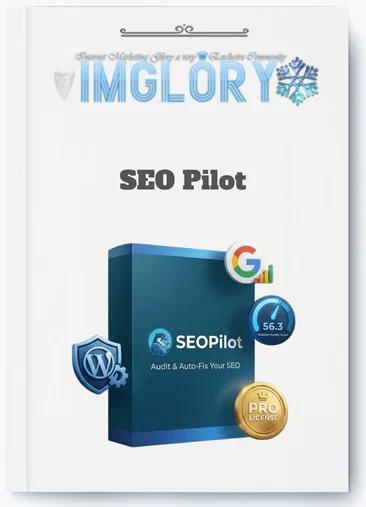
SEO Pilot is an AI-powered platform that guides content creation with SEO-focused workflows to improve search rankings.
Writing a 2,000-word SEO article from scratch can take 4 to 6 hours, including research, brainstorming, drafting, and optimizing again. SEO Pilot is an AI-powered SaaS tool designed to shorten that cycle by combining SEO content development and on-page optimization in a single, connected workspace. It is available in two forms: a web-based dashboard with a Chrome extension and a Shopify app called SEOpilot AI designed specifically for e-commerce business owners.
With over a decade of experience in software, tools, and technology, the team behind SEO Pilot recognizes one fundamental truth: uneven SEO and delayed content generation cost organizations rankings. This guide is a comprehensive 2025 buyer and user reference that covers features, use scenarios, setup, pricing context, comparisons, and commonly asked questions.
Here is what SEO Pilot delivers at a glance:
- AI content generation using your own OpenAI API key (BYOK model),
- Chrome extension for real-time on-page and SERP analysis,
- SEOpilot AI Shopify app for automated e-commerce SEO,
- Simplified publishing workflow to go from draft to live with fewer manual steps.
To understand whether SEO Pilot is right for you, we'll first clarify exactly what it does and how it works.
What Exactly Is SEO Pilot? (Core Concept & Positioning)

Consider SEO Pilot to be a coordinating layer, not just another AI writing tool. It sits on top of huge language models like GPT-3.5 and GPT-4 and directs them with SEO-specific logic. Keyword objectives, content outlines, header structures, and on-page standards are all supplied into the workflow, allowing the model to deliver results that benefit both readers and search engines. This is not a search engine. It is an SEO assistance software that organizes the data generated by an LLM.
It is worth distinguishing between two distinct products under the same brand. SEO Pilot is the web software and Chrome plugin used by bloggers, agencies, and content teams. SEOpilot AI is a Shopify-specific solution that focuses on product page and collection SEO. Both follow the same principle, yet they serve different workflows and teams.
Where does it fit into the broader SEO stack? SEO Pilot works in the content and on-page layer, above technical SEO crawlers, and may supplement or replace standalone content editors and keyword research tools. It is not a rank tracker, but the content it produces has a direct impact on ranking performance.
| Aspect | Without SEO Pilot | With SEO Pilot |
| Content creation | Manual research and writing | AI-assisted with SEO prompts and workflows |
| On-page checks | Manual checks across multiple tools | In-browser Chrome extension overlay |
| Shopify optimization | Manual edits per product or page | Automated SEO for product and collection pages |
The practical payoff is real. A thematic cluster that would normally take weeks to develop manually, involving research, briefings, and drafts, may now be completed in hours. That is the key value proposition that SEO Pilot offers.
How SEO Pilot Works Under the Hood (High-Level Workflow)
The Step-by-Step Process
Understanding how SEO Pilot works allows you to utilize it with intent rather than trial and error. The workflow proceeds in a logical order from goal setting to publication.
Step 1: Determine your target. You begin by entering a keyword, specialty, or website URL. This anchors the entire process around a search intent, which is the foundation of any well-structured SEO effort.
Step 2: Analyze SERPs and competition. SEO Pilot then analyzes the competitive landscape. It searches existing rankings using the Chrome extension or API-powered research to identify content trends such as subject depth, header structures, word counts, and topical gaps.
Step 3: Create an SEO-optimized outline and brief. Based on this analysis, the platform generates a structured content outline. This includes suggested H2 and H3 headings, target word count, semantic concepts to cover, and essential questions to ask.
Step 4: Create draft content using LLM. This is where your OpenAI API key comes in. SEO Pilot delivers the framework and SEO guidelines to GPT-3.5 or GPT-4 as structured prompts. The model produces a draft that adheres to the expected structure—not a free-form AI dump, but a directed output.
Step 5: Run on-page checks and make suggestions. Once the draft is complete, SEO Pilot conducts an on-page audit. It detects mistakes such as missing meta descriptions, incorrect heading structure, keyword density difficulties, and internal linking gaps.
Step 6: Edit, finalize, and publish. After making targeted modifications, you can either export the content or publish it with a single click.
The BYOK Model Explained
SEO Pilot follows the Bring Your Own Key (BYOK) paradigm, which means you connect your own OpenAI API key rather than paying for token usage within a closed system. This strategy allows you to control costs, have access to certain model versions, and see what is being consumed. To link your key, navigate to the settings panel, select the API configuration section, and paste the key from your OpenAI account dashboard.
One essential reminder: handle your OpenAI API key like it's a password. Never post it publicly, or incorporate it in code that others can access.
Extension vs. Dashboard — Two Modes, One Goal
The Chrome addon works in real-time. When you visit a live page or a SERP, the plugin displays SEO data immediately in your browser, including on-page scores, header structures, word counts, and competitor signals. It is fast and contextual, designed for when you are examining a page.
In contrast, the SaaS dashboard serves as a planning and production tool. Batch content projects, topical clusters, briefings, and draft management are all located here. Think of the extension as a diagnostic tool, and the dashboard as a content creation engine.
Consider optimizing a blog post for the keyword “best camping tents 2025.” You would use the extension to evaluate the top three ranking sites' structure, depth, and connected entities. Then you use the dashboard to create an outline, a draft, and optimize it before publication. The two-phase process is where SEO Pilot earns its place in a workflow.
Key Features of SEO Pilot (Web App & Chrome Extension)
SEO Pilot is designed on a set of functional pillars that encompass the entire content creation and optimization process. Each one targets a specific bottleneck in the SEO workflow.
- AI-Powered SEO Content Writer (BYOK; GPT-3.5/4)
This is the basic output engine. By adding your OpenAI API key, SEO Pilot instructs the model to generate SEO-structured material rather than merely readable writing. The advantage is time savings from directional accuracy. Most useful for intermediate to advanced users who know what good SEO material looks like. - SERP and Competitor Analysis with Chrome Extension
The addon collects signals from both the search results page and the individual ranking pages. It provides you with real-time feedback on what is working in your target SERP. Beginners gain since this eliminates guesswork. - On-page SEO Checker
Titles, headers, word count, keyword placement, and meta information are all audited as they happen. The checker identifies what has to be fixed without forcing you to launch a separate tool. - Meta Title and Description Optimization
Meta elements remain a direct indicator of click-through rate. SEO Pilot creates and assesses title tags and meta descriptions based on character constraints and keyword targeting best practices. - Semantic and LSI Recommendations
During the content generation process, related subjects, supporting phrases, and latent semantic indexing (LSI) concepts emerge. This shifts content from exact-match keyword stuffing to true topical depth, which is consistent with how Google's natural language processing currently analyzes pages. - Content Outline and Brief Generator.
Before writing a single word of body copy, SEO Pilot plans the content architecture. This is where the time savings are most noticeable: a strong brief that would take 45 to 90 minutes to create manually is now generated in minutes. - One-Click Publishing and Export
Once the draft is complete, SEO Pilot allows you to publish or export without having to manually convert everything for your CMS. This is especially important for teams who manage a high volume of content. - Content Templates and Playbooks
Pre-built templates for blog entries, product pages, and service sites provide a starting point. Instead of starting from scratch each time, you use a proven format and modify from there. - Topic Clustering with Internal Linking Logic.
SEO Pilot supports the clustering logic, which involves grouping relevant material around a pillar topic and surfacing internal link chances. This is especially handy for specialist websites and companies that handle various content verticals. - Collaboration and Sharing
SEO Pilot has capabilities for sharing briefs and drafts, making it ideal for teams or agencies with various participants. This standardizes output among writers; a consistent brief results in uniform content quality.
Pricing Plans and OTOs detailed
FE – Basic License ($27)
- 1 website support for SEO management
- Full SEO audit engine with 35+ checks
- 1-click auto-fix for 13+ issue types
- Google Search Console integration
- Competitor page analysis tools
- Lifetime access with free updates
FE – Pro License ($37)
- Includes everything in Basic version
- Support for up to 5 websites
- Bulk auto-fix for 50+ pages at once
- Priority crawl queue for faster processing
- Extended crawl depth for deeper analysis
- Commercial use rights and priority support
OTO 1 – AI SEO Optimizer ($47)
- AI meta title generator with scored variations
- Meta description writer for better CTR
- Heading optimizer for structure and keywords
- Bulk image alt text generator
- AI schema generator for structured data
- One-click auto optimization across all metrics
OTO 2 – Keyword Research Suite ($37)
- Keyword volume, CPC, and competition data
- Generate hundreds of keyword ideas
- Page-specific keyword recommendations
- AI keyword validation with real data
- Quick-win keyword finder for fast ranking
- Export data via CSV or Excel
OTO 3 – AI Toolkit GEO & AEO ($47)
- AI citation and grounding audit tools
- Brand sentiment analysis via AI models
- Bot health and crawler accessibility checks
- Content readability and AI readiness scoring
- Competitor entity gap analysis
- Action plans with downloadable reports
OTO 4 – Agency License ($97 – $197)
- Create and manage up to 10 client accounts
- Role-based access for team management
- Full SEO audit and optimization per client
- Professional PDF reports for clients
- Built-in lead finder and pipeline tracking
- Commercial use with scalable agency setup
Who Should Use SEO Pilot in 2025? (Personas & Use Cases)
Solo Bloggers and Content Creators
If you run a personal blog or content site, the most important constraint is time. You probably manage everything: keyword research, writing, publication, and promotion. SEO Pilot shortens the research and authoring stages, allowing you to spend more time on the tasks that demand your voice and judgment. You can delegate key responsibilities such as writing initial drafts, creating content outlines, and conducting on-page audits prior to publication.
Affiliate and Niche Site Owners
Niche site growth is determined by volume and topical depth. You must thoroughly cover a topic so that Google recognizes your site as a relevant authority on the subject. SEO Pilot's topic clustering and batch content features are perfectly suited to this use case. You can map an entire topical cluster, create structured briefs for each piece, and produce drafts at a rate that manual writing cannot match.
In-House Content and SEO Teams
For internal teams, the bottleneck is frequently brief quality and consistency of content across many contributors. A senior SEO may spend hours each week producing briefs; SEO Pilot automates the process. The on-page checker also provides writers with a self-service option for validating their work before it is reviewed, reducing back-and-forth during the editing process.
SEO and Content Agencies
Agencies face a unique challenge: delivering excellence at scale across multiple customers and industries. SEO Pilot provides agency teams with a consistent workflow — the same brief structure, SEO tests, and publication process — regardless of who writes the content or for which customer. A real-world example: an agency uses SEO Pilot to create and analyze briefings for ten authors at the same time, reducing briefing time by more than 50%.
Shopify and E-Commerce Brands
For store owners, SEOpilot AI fills a specific void. Product and collection pages are notoriously difficult to optimize at scale, with hundreds of them each requiring a title tag, meta description, and structured content. The Shopify app automates this process, providing SEO uniformity to areas of the store that receive the least attention.
Getting Started with SEO Pilot (Setup & Configuration)
SEO Pilot can be up and running in less than 15 minutes if you have your OpenAI API key handy. This is the procedure from account creation to first use.
Step 1: Create an account. Visit the SEO Pilot website and sign up with your email address. After submitting, check your mailbox for a verification email and confirm your address before logging in.
Step 2: Use your OpenAI API key. In the dashboard, locate “API Settings” in the left-side navigation menu. Enter your OpenAI API key in the designated field. You may find your API key in the API Keys area of your OpenAI account. Once saved, SEO Pilot will use that key to process content generating requests for you. Keep this key secret; never share it or use it in public-facing code.
Step 3: Install the Chrome extension. Open the Chrome Web Store and type in “SEO Pilot.” Click “Add to Chrome,” confirm the installation request, and then pin the extension to your browser's toolbar for easy access. When you visit a page that has to be analyzed, the extension will activate.
Step 4: Set your default settings. In the dashboard, select your desired language, tone of voice (formal, conversational, neutral), and target region. You can also choose between three article length presets: short (under 800 words), medium (800-1,500 words), and long-form (1,500+ words) to correspond with your site's content strategy.
Once you've completed these four stages, you're ready to launch your first content project. Begin with a keyword that you are already familiar with; this allows you to compare the quality of the output to your own prior understanding of the subject.
Supplemental Content: Key Questions About SEO Pilot
Is SEO Pilot a fully automated “set and forget” SEO solution?
No. Although SEO Pilot automates a substantial chunk of the content development processes, human inspection, editing, and strategic judgment remain necessary. Automation addresses structure, while skill handles detail.
Does SEO Pilot require an OpenAI API key?
Yes. SEO Pilot employs a Bring Your Own Key (BYOK) paradigm, which means you must provide your own OpenAI API key to activate the AI content production functionalities. This provides cost control and model flexibility. The “Getting Started” section above contains setup instructions.
Can I use SEO Pilot if I know nothing about SEO?
You can get started, but a basic understanding of SEO basics (keyword targeting, search intent, on-page layout) will help you get the most out of the platform. The technology facilitates the process, but it does not replace the requirement to comprehend what you are attempting to do.
Is SEOpilot AI only for Shopify?
Yes. SEOpilot AI is an app that only works with Shopify. It's made for store owners who need to make large groups and product pages work better. You would use the main SEO Pilot web app and Chrome extension if you are on a different e-commerce site
Does SEO Pilot guarantee higher Google rankings?
Rankings can't be promised by any tool, not even SEO Pilot. Domain authority, backlinks, page speed, user interaction, and many other things affect where a website ranks in search results. The structural and semantic basis that SEO Pilot gives your content makes it more likely to rank.
Can SEO Pilot replace human writers?
It can do a lot of the work that used to be done by drawing and building things. But high-quality material still has to be judged by humans for things like originality, brand voice, subject-matter depth, and judgment. Use SEO Pilot to make first drafts faster and better organized, not to get rid of the human layer
Does SEO Pilot work in multiple languages?
SEO Pilot can work with more than one language, based on what the connected LLM (GPT-3.5/4). You can change the target language from the choices that are already there. Still, quality and SEO accuracy may be different depending on the language, so always check the product in the context of your target market
Is there a free plan or trial available?
Availability of a free tier or trial period can change. Check the official SEO Pilot website for the most up-to-date pricing and trial information before committing.
Does SEO Pilot work for video or social media content?
SEO Pilot is primarily oriented toward web page content — blog posts, product pages, service pages. It is not built specifically for YouTube SEO, social media captions, or video scripts, though some features may apply with adaptation.
Is the Chrome extension available for browsers other than Chrome?
The extension is built for Chrome. Users on Chromium-based browsers (such as Microsoft Edge) may be able to install it via the Chrome Web Store, but official support may be limited. Check the extension listing for current compatibility details.
What category of SEO tool does SEO Pilot belong to?
SEO Pilot combines three tool categories: AI content writer, on-page SEO checker, and content brief generator. It is neither a technical SEO crawler (like Screaming Frog) nor a comprehensive platform with rank tracking and backlink analysis (like Ahrefs or Semrush). It focuses on the content creation and on-page optimization aspects of the SEO process. If you currently have rank tracking and link tools in your toolkit, SEO Pilot fills a gap rather than replacing them.
What kinds of websites benefit most from SEO Pilot?
Content-rich websites gain the most. Blogs, affiliate sites, niche authority sites, agency client websites, and Shopify stores all meet the requirements. Websites that produce fewer than two or three pieces of content per month may find the cost-to-value ratio less appealing. The platform is designed for teams and individuals who need to publish often and produce high-quality material at a steady rate.
How does SEO Pilot differ from generic AI writers like ChatGPT or Jasper?
Generic AI writing tools generate material based on prompts; they do not automatically apply SEO logic unless you design the prompt yourself. SEO Pilot integrates the AI generation process into an SEO-specific workflow, including competitive research, keyword-informed outlines, semantic recommendations, and on-page checks. The end result is material that is optimized for search performance rather than just readability. If you've been utilizing ChatGPT for content and manually adding SEO structure later, SEO Pilot combines those two stages into a single, integrated procedure.
How does SEO Pilot compare with full-suite SEO platforms?
Full-service solutions such as Ahrefs, Semrush, and Moz are founded on data, including keyword counts, backlink profiles, site audits, and rank tracking. They provide some content tools, but content development at scale is not their major focus. SEO Pilot focuses on content production and on-page execution. Both categories are complementary. Many users run a full-suite tool for research and ranking data, then utilize SEO Pilot to create and optimize the content that the tools identify as potential.
When should I choose SEOpilot AI over a generic Shopify SEO app?
Most generic Shopify SEO apps take care of the technical stuff, like sitemaps, structured data, and picture alt text. SEOpilot AI goes even further by taking care of the meta titles, descriptions, and SEO-optimized body text on a large scale for product and collection pages. SEOpilot AI fills in the blanks if you have a Shopify store with dozens or hundreds of goods and your on-page content is thin or inconsistent. On top of that, SEOpilot AI takes care of the content, while a normal Shopify SEO app takes care of the infrastructure.
Looking Ahead: The Future of SEO Pilot & AI SEO Tools
In 2025, AI-powered SEO techniques will go toward greater semantic comprehension. Early AI content technologies excelled at producing fluent writing. The next phase, which includes SEO Pilot, adds structured SEO reasoning to that fluency. The next phase is entity-level analysis, which involves knowing not just what words to use, but also which real-world concepts, relationships, and knowledge graph linkages make a page truly authoritative on a certain topic.
Closer interaction with Google Search Console and analytics systems is also a logical step. Most AI content technologies now function upstream of performance data, assisting you in creating content but without closing the loop by learning how that material performs in search. As that link strengthens, tools such as SEO Pilot will be able to identify ineffective pages, recommend targeted fixes, and prioritize which material to update based on actual ranking and click-through statistics.
Factual accuracy is another frontier. LLMs can generate confident-sounding inaccurate information. In an environment where Google's quality evaluation progressively values Experience, Expertise, Authoritativeness, and Trustworthiness (E-E-A-T), solutions that include fact-checking layers or source verification will be more useful for serious content operations.
The moniker “SEO Pilot” conveys an important message: you are the pilot, and the instrument panel serves as your tool. AI-assisted material will continue to evolve, but the judgment, strategy, and real-world knowledge that make content truly beneficial to readers will remain the responsibility of the person behind the keyboard. With over ten years of experience in software, tools, and technology, SEO Pilot is positioned as a long-term partner in that journey – not a replacement for expertise, but a sharper tool in the hands of someone who already has it.
Be the first to review “SEO Pilot + OTOs”
You must be logged in to post a review.
Related products
Out of stock
GB SAAS Tools
Original price was: $230.00.$35.00Current price is: $35.00.
Out of stock
GB SAAS Tools
Original price was: $297.00.$33.00Current price is: $33.00.
GB SAAS Tools
Original price was: $302.00.$60.00Current price is: $60.00.

GB SAAS Tools
Original price was: $59.00.$19.00Current price is: $19.00.

GB SAAS Tools
$39.00
Reviews
There are no reviews yet.